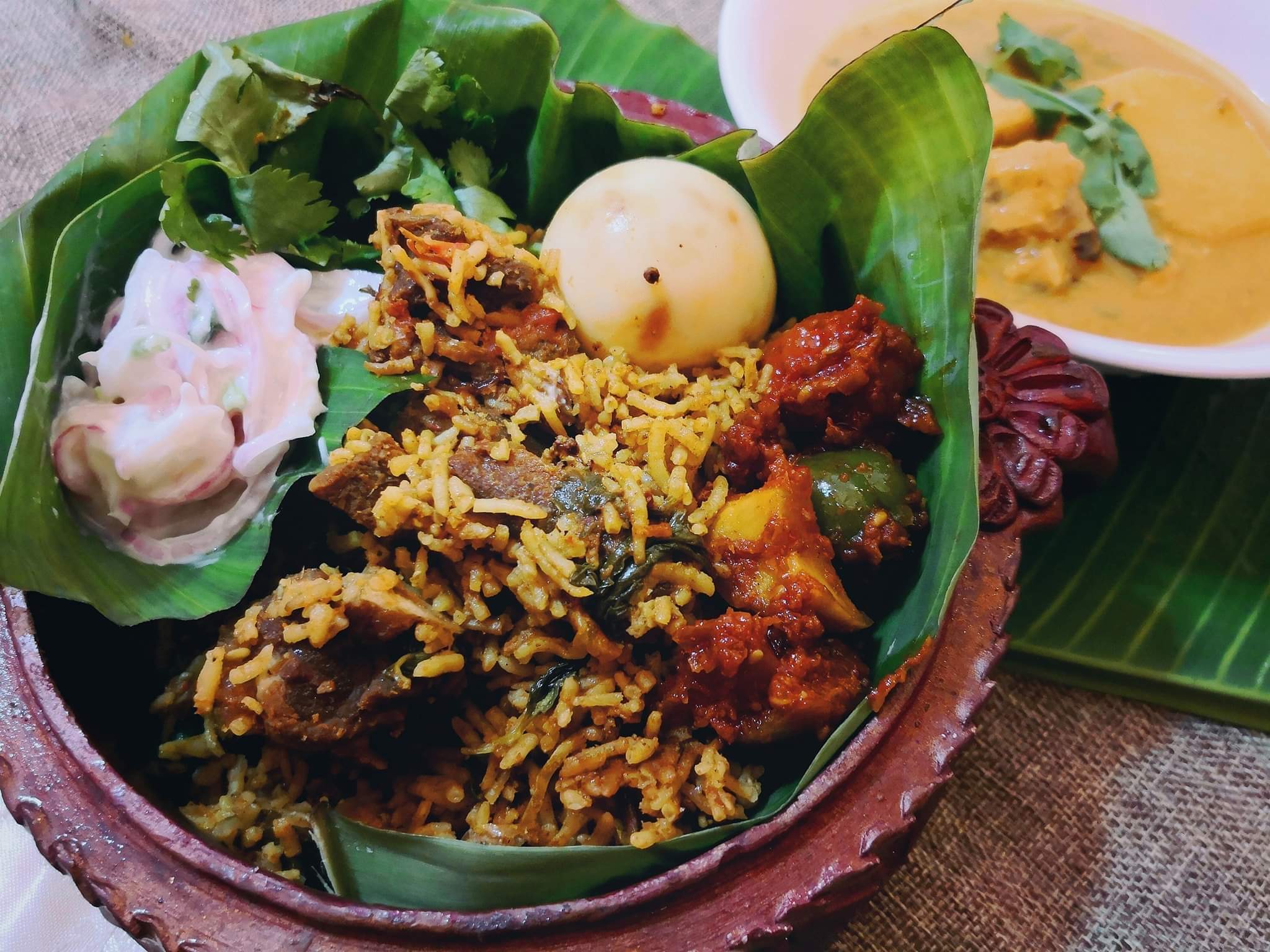
Ambur Biryani
The wood-fire biryani of Tamil Nadu. Seeraga samba rice, a soaked red-chili paste (not powder), and a legendary meat-to-rice ratio. Always served with dhalcha.
Where it comes from.
Descended from the kitchens of the Nawabs of Arcot — an 18th-century Mughal vassal dynasty that ruled the Carnatic from Arcot. Hasin Baig, a cook in the Arcot Nawab's kitchen, opened the first Ambur Star Biryani restaurant in his hometown in 1890. The family is now in its fourth generation.
How to cook it.
- 01
Make the Red Chili Paste
Soak 10–12 dried red chilies in warm water for 20 minutes. Drain and grind to a completely smooth paste. This paste — not chili powder — is the Ambur precision instrument for heat control.
Pro tipThe paste gives warmth and complexity at a molecular level that dry powder cannot. Ambur biryani is spiced, not spicy. The precision is in the paste.
- 02
Build the Masala
Heat ghee+oil; sauté whole spices. Add sliced onions; cook to light golden. Add ginger-garlic paste; fry 2 minutes. Add the red chili paste; fry until oil separates. Add tomatoes; cook to a thick glossy masala. Add yogurt, salt, mint, coriander.
- 03
Cook the Mutton
Add mutton to the masala; cook covered 40–50 minutes until very tender. The gravy should be thick and coating the meat like a glaze — not soupy.
- 04
Layer & Dum
Par-boil seeraga samba in salted water to 75%. Drain. Layer rice over the mutton in the same cooking pot; drizzle a little masala liquid; cover tightly; dum on lowest heat for 20 minutes (traditionally over a wood fire, which adds a faint smokiness).
What goes on the plate.
- Dhalcha (mutton-dal-bottle gourd curry — essential)
- Brinjal pachadi (eggplant raita)
- Raw onion
- Lime wedge
Ambur biryani famously uses a 1:1 meat-to-rice ratio by weight — twice the meat of most other styles. The original Ambur Star Biryani restaurant (est. 1890) is still run by the same family and has never changed its recipe.