 🇮🇳 India
Hyderabad
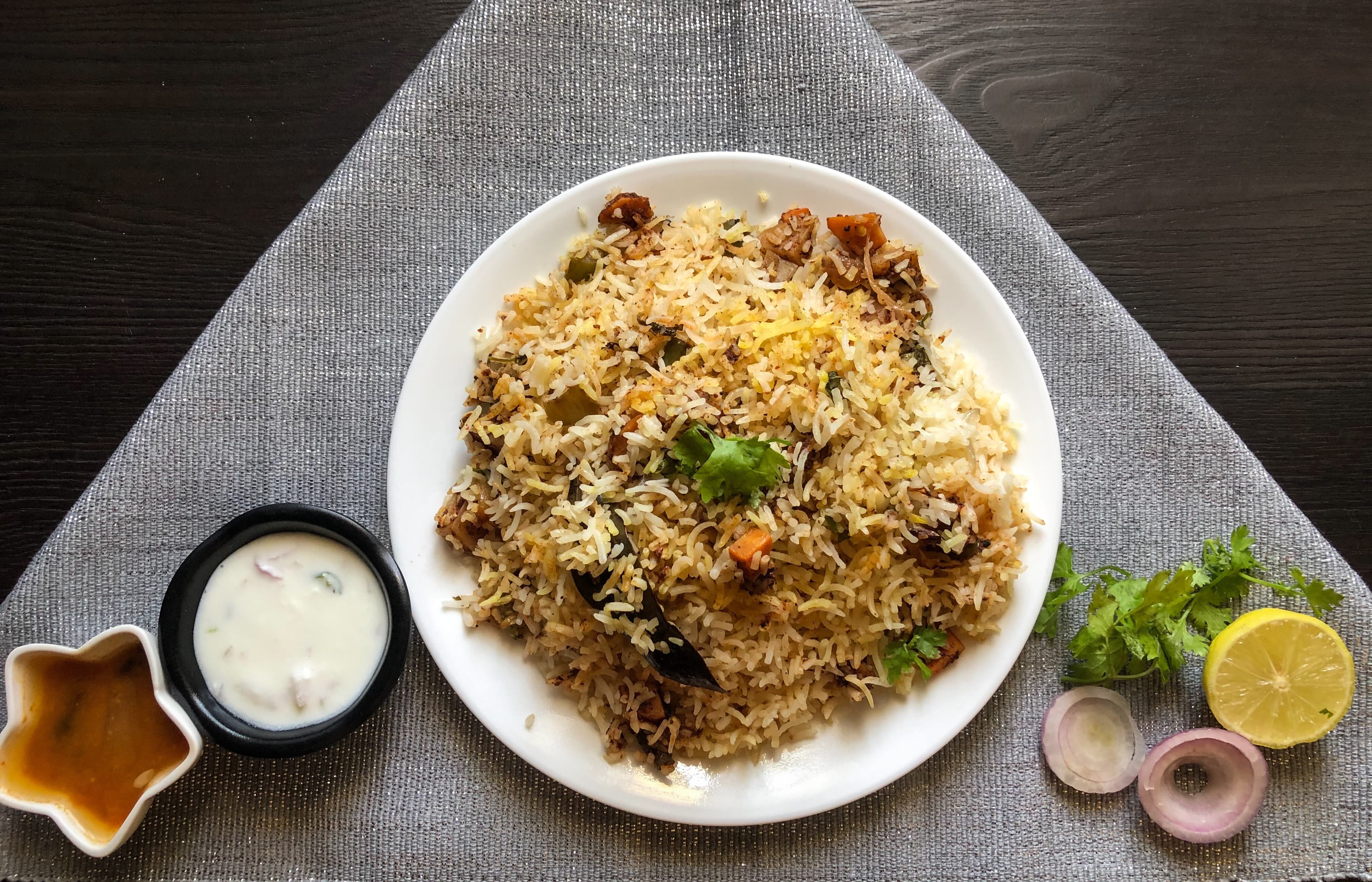
Hyderabadi Kacchi Biryani
The king of all biryanis. Raw marinated mutton and par-boiled rice sealed in a handi — the most technically demanding biryani on Earth.
Advanced6 hours

Fourteen biryanis. Twelve countries. One sealed pot. From the Nizam’s handi in Hyderabad to the Cape Malay deg in Bo-Kaap, every recipe here is sourced, tested, and written for cooks who care about why, not just what.
Swiggy orders in 2025
One biryani every 3.25 seconds, all year, on a single Indian platform.
Recipes archived here
Each one sourced from a specific city, a specific tradition, a specific kitchen.
Masalas in the Nizam's biryani
Allegedly. Today's most elaborate home recipe uses around 24.
Plates on Eid in Old Dhaka
Fakhruddin's kacchi recipe has never been written down. It is passed by hand and smell.
🇮🇳 IndiaThe king of all biryanis. Raw marinated mutton and par-boiled rice sealed in a handi — the most technically demanding biryani on Earth.
 🇮🇳 India
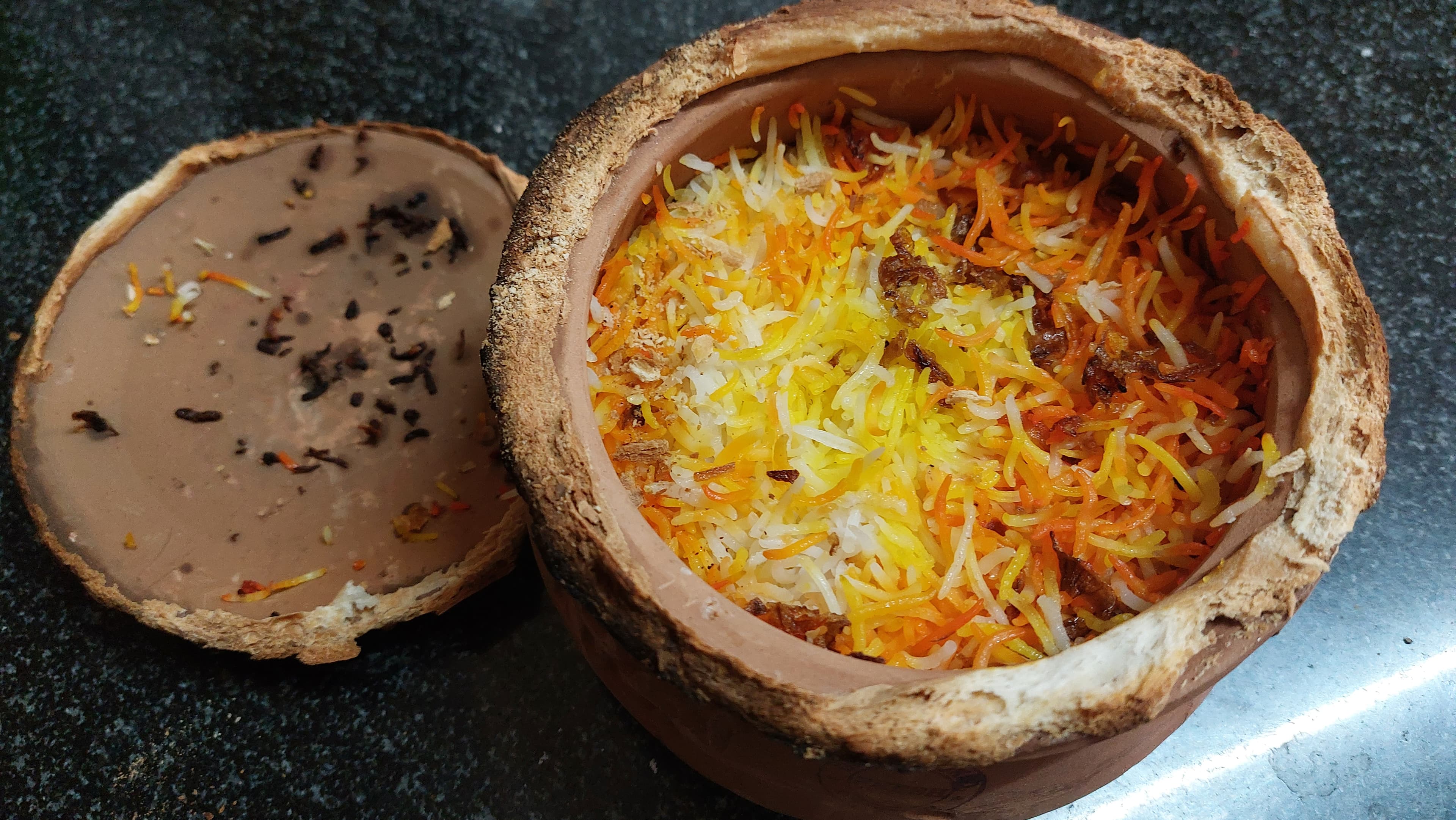
The perfumer's biryani. Meat slow-cooked in aromatic stock, layered with rice perfumed with rose water, kewra, and meetha attar. Subtle, floral, refined.
 🇮🇳 India
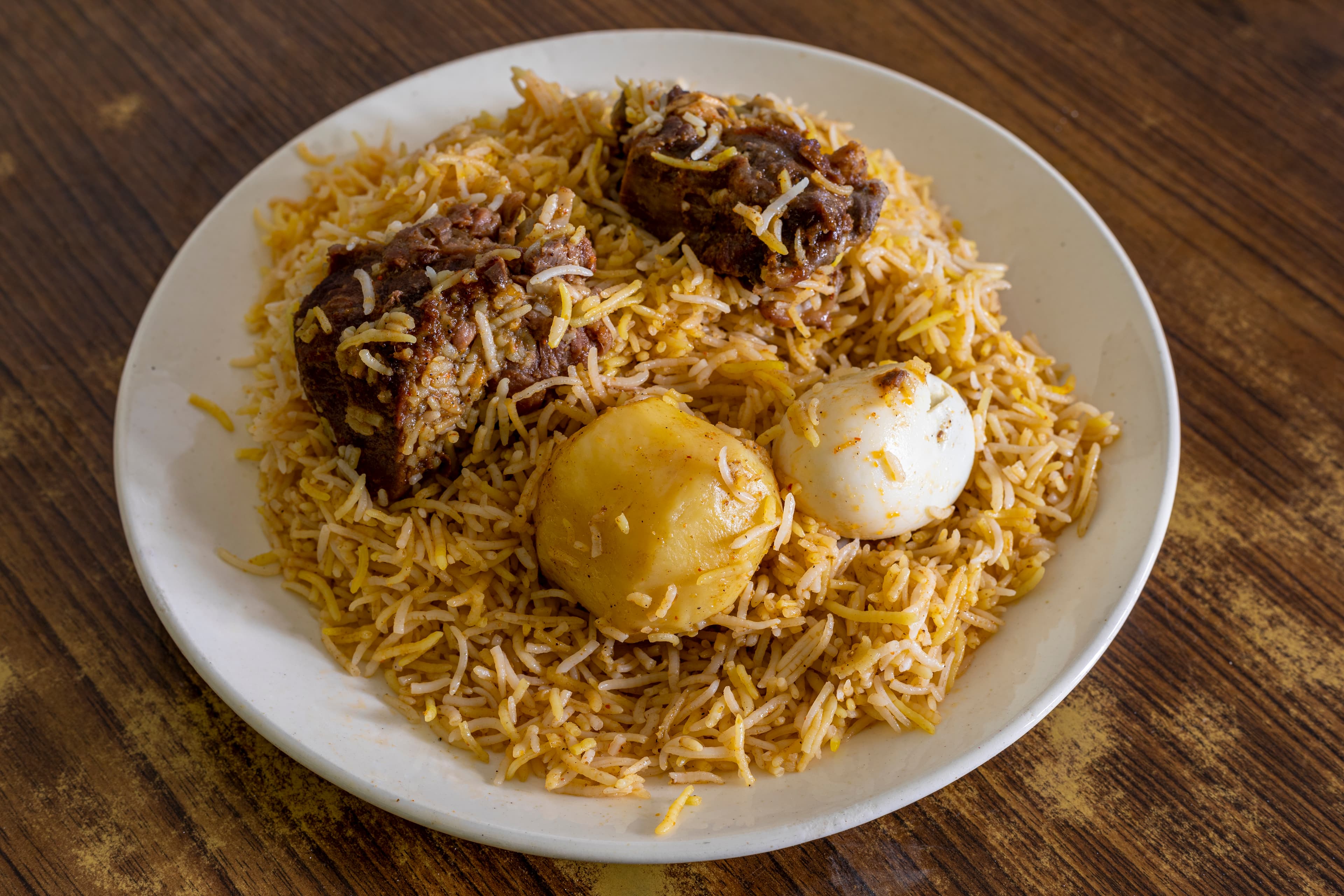
Born in exile. The last Nawab of Awadh brought his royal chefs to Bengal in 1856. The potato entered biryani as a luxury novelty — and became its soul.
 🇿🇦 South Africa
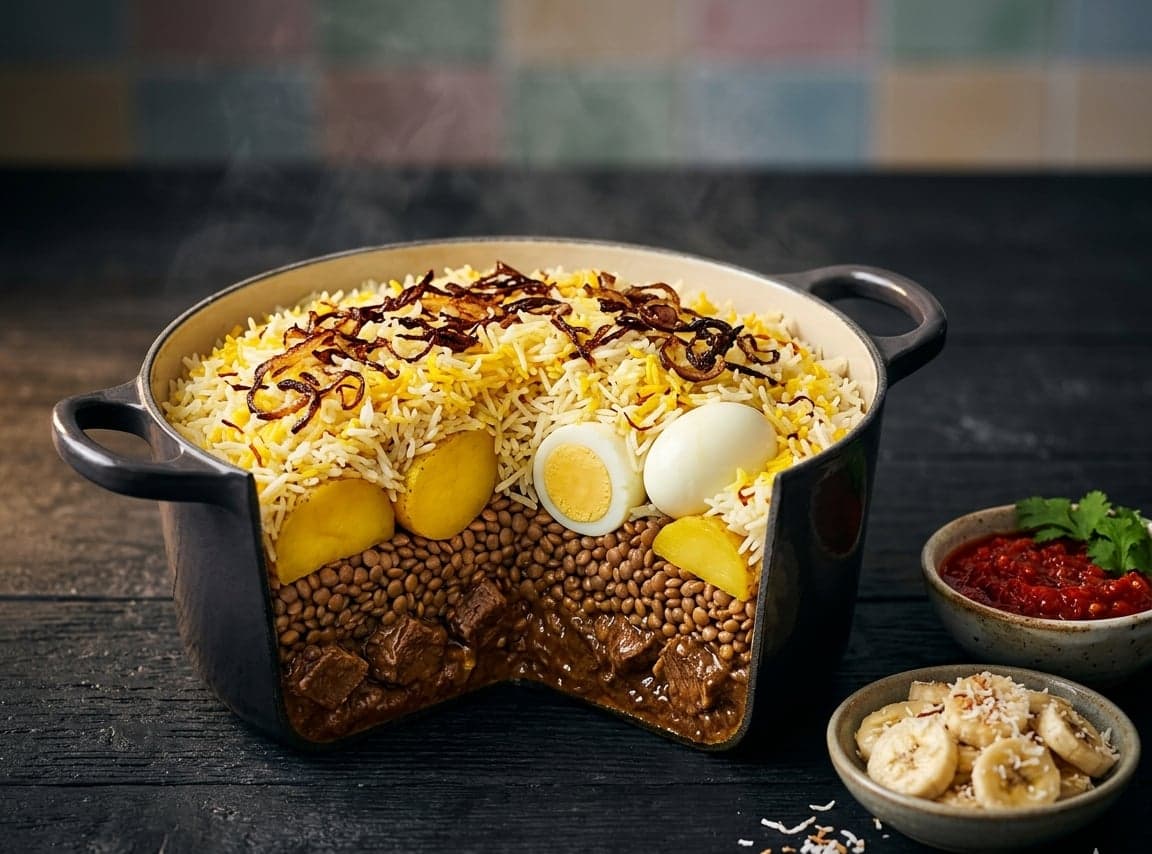
The most unique biryani on Earth. Created by enslaved cooks from Java, Bengal, and India in 17th-century Cape Town. The brown lentil layer exists nowhere else in the world.
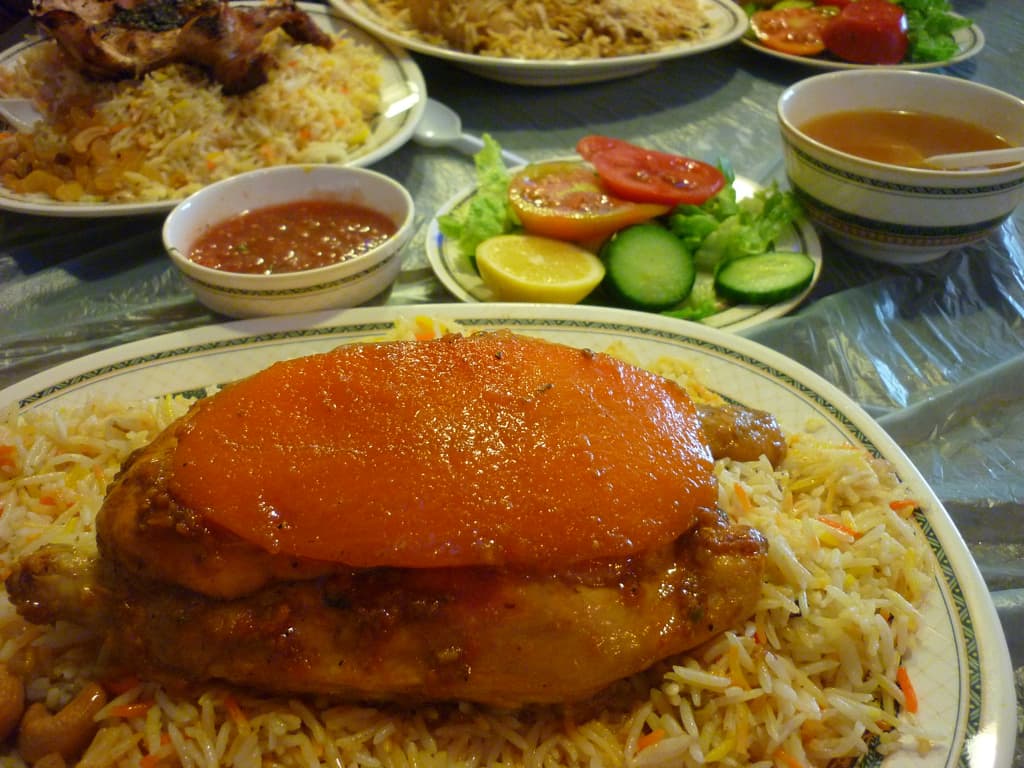 🇾🇪 Yemen
The ancestral pit-fire rice of Yemen. Whole chicken rubbed with hawaij, rice absorbs the dripping juices below, all sealed in an underground tannour. The charcoal smoke is the secret.
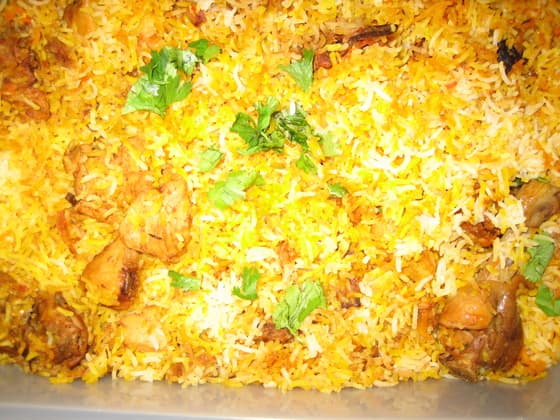 🇮🇳 India
Kerala's coastal aristocrat. Uses tiny Kaima/Jeerakasala rice — not basmati. Fennel-forward spice, raisins, cashews, and the gentlest dum in Indian biryani.

One pot. A thousand years of migration.
Persian polow crossed the Khyber Pass with Arab and Persian traders. The Mughal court codified the sealed-pot method in the seventeenth century. Asaf Jah I carried it south to Hyderabad in 1713; Wajid Ali Shah carried it east to Kolkata in exile in 1856.
Tamil Muslim traders took it to Penang and Singapore. Yemeni migrants brought mandi to the Hyderabad neighborhood of Barkas. Indian indentured labourers carried it to Mauritius; enslaved cooks from Java and Bengal carried it to the Cape of Good Hope. Each port added something irreversible.
In 2025, Swiggy alone recorded 93 million biryani orders in India — 57.7 million of them chicken. That is one biryani ordered every 3.25 seconds, 24 hours a day, 365 days a year.
The Nizam of Hyderabad's court allegedly used 78 distinct masala components in their royal biryani. Today's most elaborate home recipes use around 24.
Despite popular legend, Nawab Wajid Ali Shah received a British pension of ₹12 lakh per annum — enough to feed tigers. The potato entered Kolkata biryani as a fashionable luxury novelty, not a budget stretcher.
Every recipe here begins with the same instruction: trust the dum. Pick the city you want to cook from, gather the spices, and we will walk you the rest of the way.
Browse all recipes