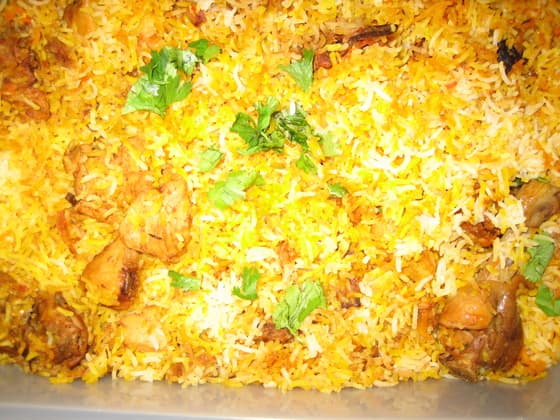
Thalassery Malabar Biryani
Kerala's coastal aristocrat. Uses tiny Kaima/Jeerakasala rice — not basmati. Fennel-forward spice, raisins, cashews, and the gentlest dum in Indian biryani.
Where it comes from.
Developed in the kitchens of the Moplah (Mappila) Muslim community of Malabar — descended from Arab traders who settled the Kerala coast from the 7th century CE. The choice of Kaima rice over basmati reflects the community's coastal, non-Mughal identity.
How to cook it.
- 01
Make Chicken Masala
Heat ghee; sauté whole spices until fragrant. Add ginger-garlic-chili paste; fry 2 minutes. Add chopped tomatoes; cook until oil separates. Add whisked yogurt, three-quarters of the birista, Malabar garam masala. Add chicken pieces; cook covered 15–20 minutes (no water needed — chicken releases enough). Finish with lime juice, mint, coriander. The masala should be thick, coating the chicken.
Pro tipHave the rice ready to cook the moment the masala is done. Kaima rice absorbs water quickly and should not sit waiting.
- 02
Cook the Kaima Rice
Heat 2 tbsp ghee in a flat-bottomed pot; add a few whole spices; add rinsed (not soaked) Kaima rice; toast gently for 2 minutes. Add 750ml boiling water + salt. Cover tightly; cook exactly 10–12 minutes on low heat.
Pro tipKaima rice is unlike basmati — it needs NO soaking and cooks in 10 minutes flat. Treat it like Italian risotto rice: watch it, don't walk away.
- 03
Layer & Dum
Layer in pot: chicken masala; cooked Kaima rice; saffron water; rose water; remaining birista; fried cashews and golden raisins; ghee. Seal lightly; dum on lowest heat for just 10–15 minutes.
What goes on the plate.
- Pappadum
- Lime pickle
- Coconut chammanthi
- Raita
- Date pickle (ethapazham achar)
Kaima/Jeerakasala rice — named for its cumin-seed shape — is a Western Ghats heirloom variety grown only in Kerala. It contains the same aromatic compound (2-acetyl-1-pyrroline) as basmati, but in a much smaller, stickier grain. It has never been successfully cultivated outside Kerala.