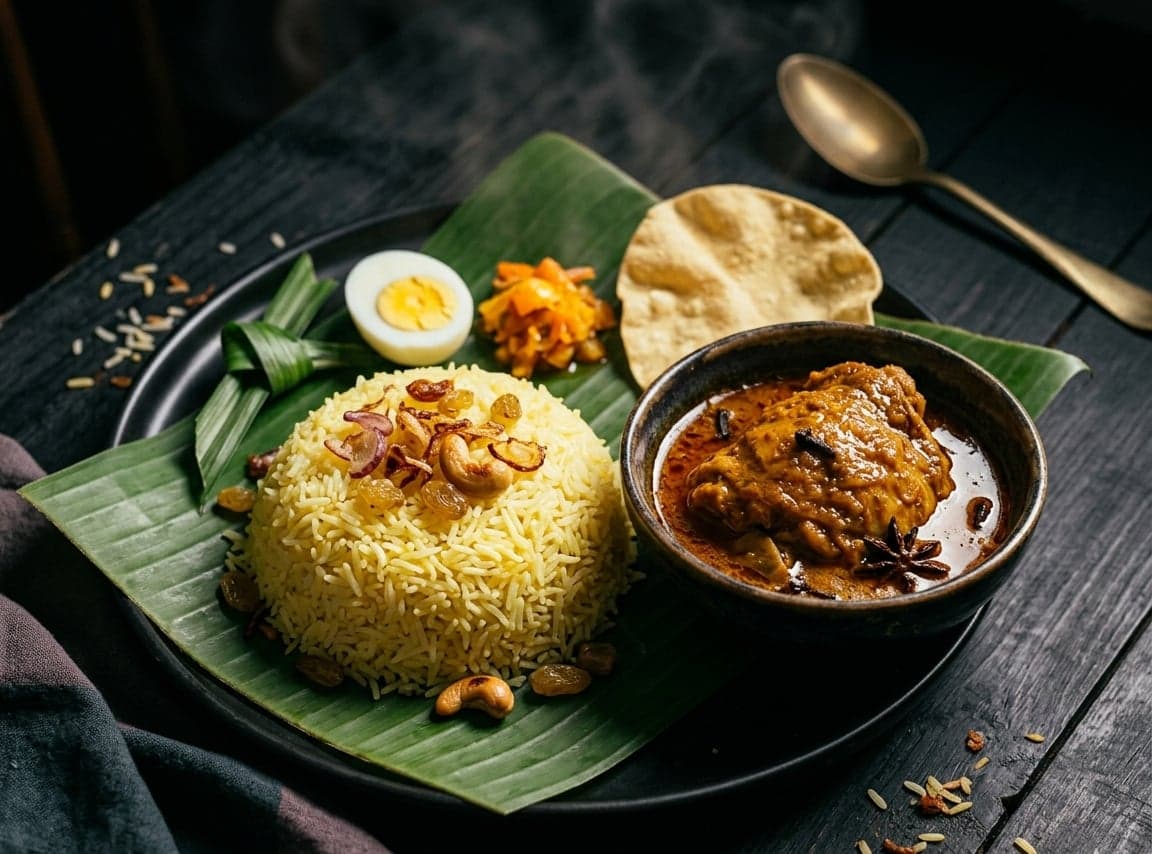
Malaysian Nasi Briyani Ayam
The Southeast Asian adaptation — rice cooked by absorption with pandan and lemongrass, evaporated milk adding richness. Rice and chicken served separately, not layered. Pure Malaysian fingerprint.
Where it comes from.
Brought to British Malaya by Tamil Muslim (Mamak) traders from the 19th century onward, and independently by Arab Hadhrami merchants in Penang and Johor. The local adaptation replaced dum cooking with an absorption method and added indigenous aromatics: pandan, lemongrass, and evaporated milk — creating something entirely new.
How to cook it.
- 01
Marinate Chicken
Marinate chicken in yogurt, turmeric, biryani spice mix, and salt for 30 minutes.
- 02
Cook Chicken Separately
Heat ghee; sauté whole spices until fragrant; add onions to soft golden. Add ginger-garlic paste; add marinated chicken; brown on all sides. Add one chopped tomato; cook until oil separates. Simmer covered until chicken is cooked through — about 25 minutes. Keep warm.
- 03
Cook Rice by Absorption
In a separate pot: heat 2 tbsp ghee; sauté a few whole spices and sliced onion until soft. Add basmati rice; toast 1 minute. Pour in evaporated milk + water + knotted pandan leaves + bruised lemongrass + turmeric + salt. Cover tightly; cook on low heat for 15 minutes; rest undisturbed 5 minutes; fluff with a fork.
Pro tipThe evaporated milk + pandan + lemongrass combination is the Malaysian fingerprint. This transforms what would otherwise be a plain absorption method into something fragrant and rich. Never skip these three ingredients.
- 04
Plate Separately
Plate rice on a large platter. Serve the chicken curry in a separate bowl alongside — not on top. Garnish rice with fried shallots, toasted cashews, and golden raisins.
What goes on the plate.
- Acar (pickled cucumber-carrot-pineapple in sweet-sour dressing)
- Pappadum
- Dalcha (lentil and mutton-scrap curry)
- Sliced cucumber
- Hard-boiled egg