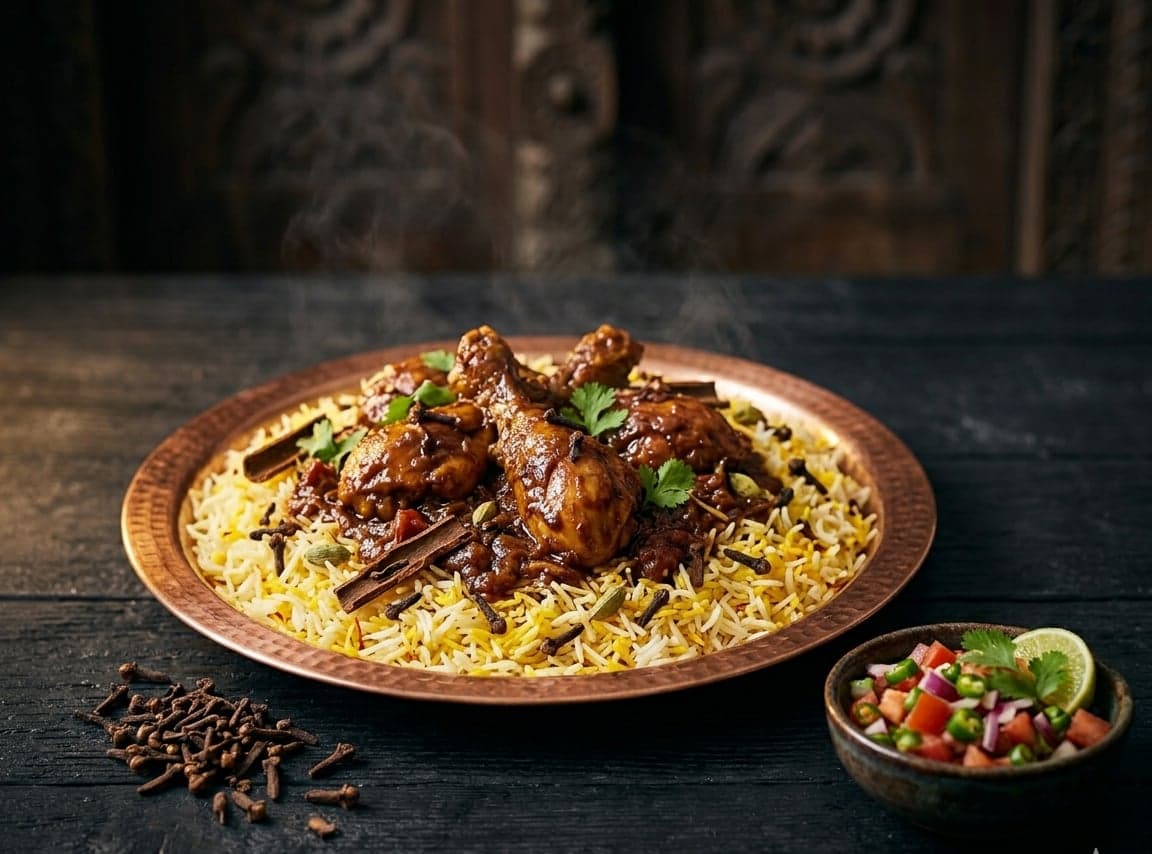
Zanzibari Biryani
The Swahili Coast crown. Zanzibar — spice island, clove capital — created a biryani perfumed with its own cloves and rose water. The Indian Ocean trade in one pot.
Where it comes from.
Zanzibar was the most cosmopolitan port on the East African coast, controlled by the Omani Sultans from 1698–1856. Indian merchant communities settled there from the 18th century, bringing biryani with them. The Omani Sultans' decision in the 1820s to forcibly transplant cloves from Indonesia to Zanzibar created both the island's economy and its dominant biryani flavour.
How to cook it.
- 01
Build the Masala
Heat ghee; sauté whole cloves and spices until highly fragrant. Add onions to soft golden. Add ginger-garlic-chili paste; add ground spices; add chopped tomatoes and tomato paste. Cook to a thick, glossy, dark masala.
- 02
Cook the Chicken
Add chicken; cook covered until tender — 25–35 minutes. Stir in whisked yogurt off the heat to prevent curdling. The gravy should be thick and deeply coloured.
- 03
Layer
Half the par-boiled rice; chicken with all its gravy; remaining rice; birista; saffron milk; and then — the Zanzibari signature — drizzle 2 generous tablespoons of pure rose water across the entire top of the rice.
- 04
Oven Dum
Cover tightly. Transfer to a 190°C oven for 35–40 minutes (or lowest stovetop heat for 25 minutes).
Pro tipThe rose water drizzled on top is what makes this Zanzibari. Without it, you have a well-spiced East African biryani. With it, the finished dish carries the scent of Persian trade routes all the way to the Swahili Coast.
What goes on the plate.
- Kachumbari (tomato-onion-chili-coriander-lime salad — the East African standard)
- Pickled green mango
- Coconut chutney
Zanzibar produces approximately 70% of the world's clove supply — a crop stolen by Omani Sultan Said ibn Sultan from the Dutch colonial monopoly in the Indonesian Banda Islands in the 1820s. Every clove in Zanzibari biryani carries a history of colonial botanical piracy.